The mobile reimbursement policy is the running joke of every HR town hall. The employee buys a phone. The employee sits on the bill for three weeks because finance is closing the quarter. The employee finally submits. The bill is incomplete because GST is missing. The employee resubmits. The bill is paid two months after the purchase. The employee has forgotten what the reimbursement was for.
Every HR leader we speak to has lived a version of this. The reimbursement model worked when it was occasional and small. It does not work as a primary device benefit. The leasing alternative, ReimburseEase, removes the friction without removing the benefit.
This post is the HR playbook for that shift.
The cost of running a reimbursement policy
Let's be honest about what reimbursement actually costs your team, beyond the rupees on the bill.
Cycle time. From the day the employee buys the device to the day the money lands in their account is typically 4 to 8 weeks at a mid-sized company. Larger companies, often 8 to 12.
Finance overhead. Every reimbursement is a manual entry. Invoice verification, GST matching, expense category assignment, approval routing. At 200 reimbursements a quarter, finance teams spend real days on this.
Audit risk. Reimbursements are flagged in many internal audits because the invoice quality is uneven. Personal vs business use becomes a debate. Some companies have backed off entirely after a tax notice.
Employee experience. The employee fronted the money for two months. Their goodwill toward the benefit erodes with each delay. The next time the company announces a "new benefit", scepticism builds.
The reimbursement model treats the device as an expense to claim. The leasing model treats it as a benefit to use.
What ReimburseEase does
ReimburseEase is the SmartLease product designed specifically for companies replacing existing reimbursement programmes.
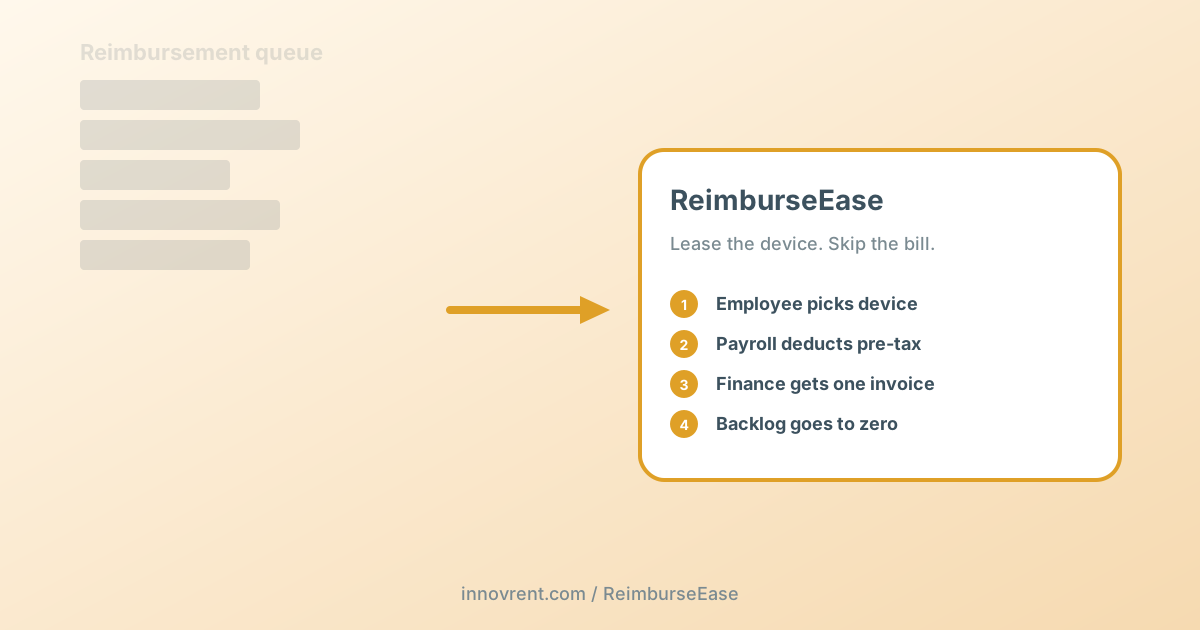
The shape: instead of an employee buying a phone and claiming back, the company enrols the employee in a pre-tax lease at the moment of purchase. The employee picks the device. The device ships. The lease cost shows up on the payslip as a pre-tax deduction. No reimbursement to file, no invoice to chase, no GST line to dispute.
For HR, the operational change is small. The reimbursement budget you already approved becomes the lease budget. Same CTC envelope. Different mechanism.
For finance, the savings are real. There is one consolidated invoice from InnovRent each month, broken out by employee. No 200 individual bills to process.
For the employee, the device is in their hand on day one, not at month two.
The salary-structuring question
This is the first question HR asks, every time. Will switching to a lease change my employees' CTC structure?
The short answer: no, not in any visible way that requires a comp-letter rewrite.
The longer answer: the lease deduction sits inside the existing flexible benefits envelope, alongside the components employees already structure (LTA, food, fuel reimbursement, etc.). It does not add a new line item. It replaces an existing one (the device reimbursement allowance), or it pulls from the special allowance.
A handful of clients have asked for a formal addendum to their offer letters explaining the new component. Most have not needed one. The deduction is operationally identical to other pre-tax components from a payroll perspective.
What HR actually needs to do
Three things, total.
One. Sign a master services agreement with InnovRent. This is the boilerplate. The terms are negotiated once.
Two. Send your employees an enrolment link. They self-onboard.
Three. Forward the monthly InnovRent invoice to finance. Finance reconciles. Done.
There is no payroll integration to build. The deduction line is added to the monthly payroll input in the same way LTA or food coupons are. Most payroll systems (Darwinbox, Keka, RazorpayX, Zoho Payroll, etc.) handle this in their existing flexible-benefits module.
What it looks like at scale
A 200-person company we worked with last year ran the maths after six months on ReimburseEase. Their before and after, in their HR director's words:
- Reimbursement backlog: from an average of 47 open items to zero.
- Finance team hours on device reimbursements: roughly 60 hours per quarter to under 5 hours per quarter.
- Employee survey score for "Benefits delivery is timely": 6.2 out of 10 to 8.9 out of 10.
- Average device age: 38 months to 22 months.
The device-age drop was the surprise. When the friction of getting a new device goes from "I have to front 80,000 rupees and wait two months" to "I click a link and it arrives", employees upgrade more often, which means devices in the company are newer, which means support tickets for hardware go down. The IT team noticed.
What does not work
It is worth being honest about the limits.
- Pure consultants and contractors. ReimburseEase works for salaried employees. If your workforce is mostly on consulting contracts, the pre-tax structure does not apply the same way.
- Very small companies. If you have under 30 employees, the per-employee overhead is fine, but the negotiated bulk pricing is less dramatic. SmartLease still works; the cost savings are smaller.
- Devices for non-work use only. The Income Tax Act's framing of employer-provided equipment assumes the device has work utility. A pure-personal-use leisure device sits outside the structure.
For everything else, the playbook is simple. Stop reimbursing. Start leasing.
Where this is going
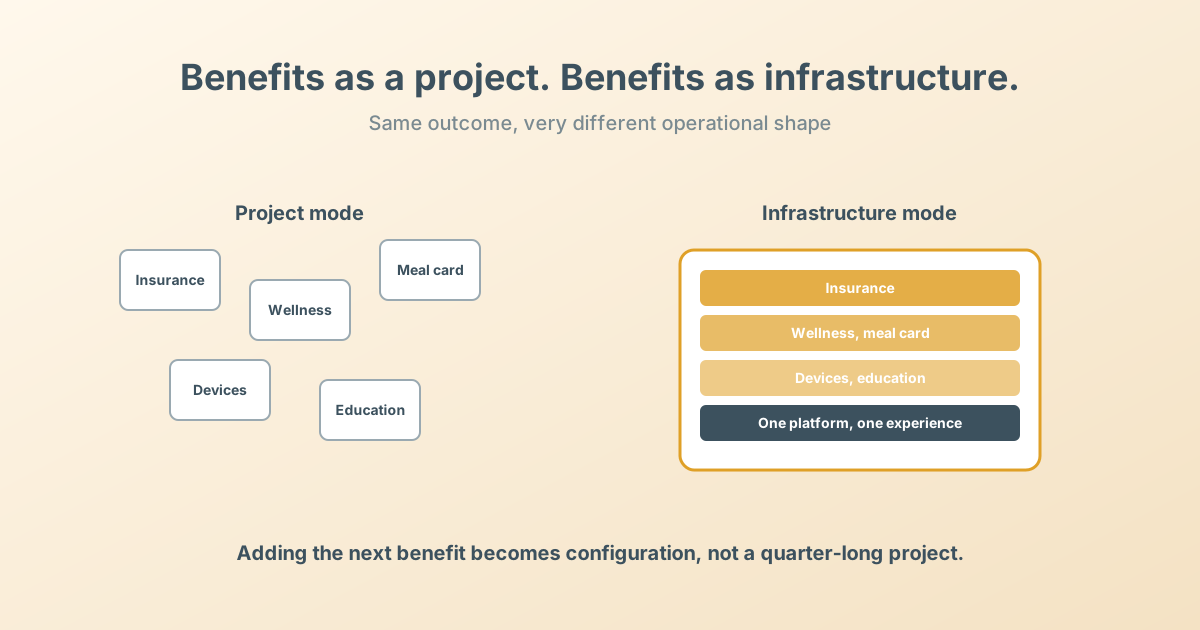
The 2025 trend across mid-market Indian companies is a quiet but consistent shift from reimbursement-based benefits (mobile, internet, fuel) to structured benefit programmes (leasing, vouchers, meal cards). The reason is the same in each case: structured benefits scale, reimbursements do not.
Device leasing is the largest of these by employee perceived value, because the device is the most visible, most-used object in an employee's working day. Getting it right is high leverage.
If you are an HR leader reading this, the next step is a 30-minute call with InnovRent's team. Bring your existing reimbursement policy document. We will model what the same budget looks like as a lease programme, and what your finance and employee experience numbers might look like at month six.
Read our case study for a deeper look at one rollout, or contact us to schedule that call.