Ask any HR head in India what employees actually want today and the answer keeps drifting in the same direction. People want their salary to do more. They want the latest phone, the right laptop, a chair that does not hurt their back. They want their employer to make those things easier, not harder.
Device leasing is one of the answers that has grown up around that demand. It is not new in the world; companies in the US and Europe have offered device benefits for years. What is new is how Indian employers are starting to deploy it.
This post is a general overview. It explains what device leasing looks like as an employee benefit, where it fits in a typical Indian compensation package, and why it has become a quiet talking point in HR circles through 2025 and 2026.
What is a device benefit, in plain English
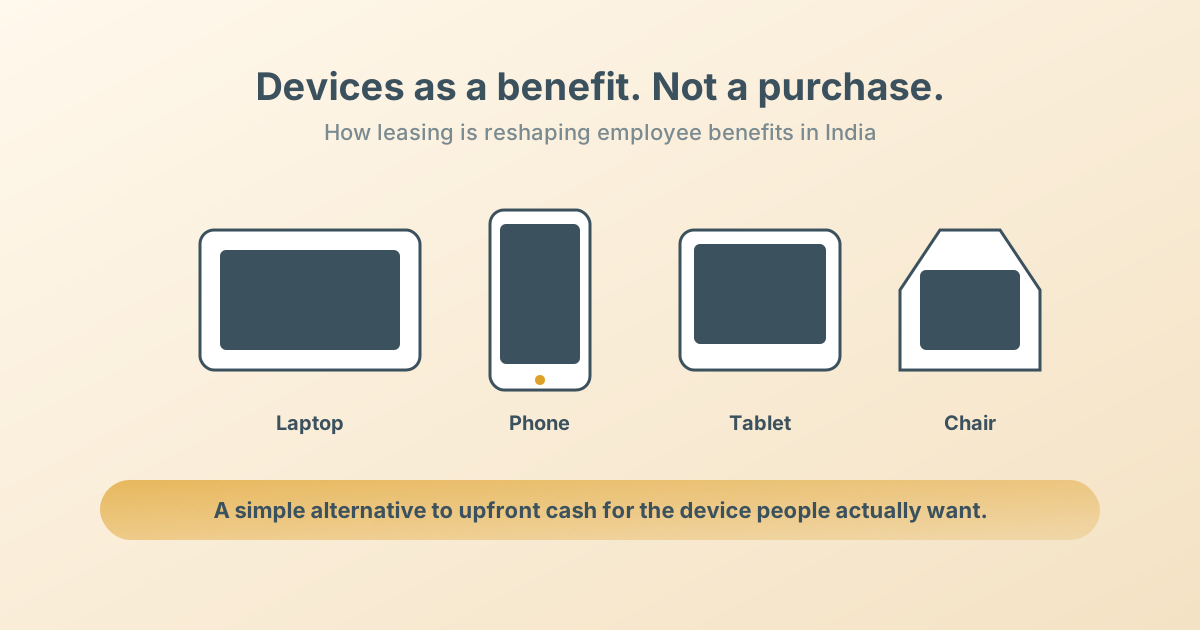
A device benefit is when your employer offers you a way to use a high-quality phone, laptop, tablet, or ergonomic furniture without paying for it upfront yourself.
You pick a device that suits your work. The employer handles the procurement and the paperwork. The cost is structured through your salary in a way that is gentler on your monthly take-home than buying the same device outright. At the end of the term you usually have a choice: keep the device, upgrade it, or hand it back.
That is the entire shape of it.
The variations live in the details. Some programmes are pure rentals. Some have ownership pathways. Some are bundled with insurance and support. Some apply only to laptops; others include phones, tablets, monitors, and furniture. The brand names differ. The general idea is the same.
Why employers are paying attention in 2026
Three patterns from recent India workforce research are driving the interest.
The first is that hybrid work has settled in. The Nasscom Return to Workplace and follow-up studies have consistently shown that a majority of Indian knowledge workers now expect a flexible mix of office and home, with proper equipment at both ends.[¹] When your team is hybrid, the question of who supplies the home device stops being optional.
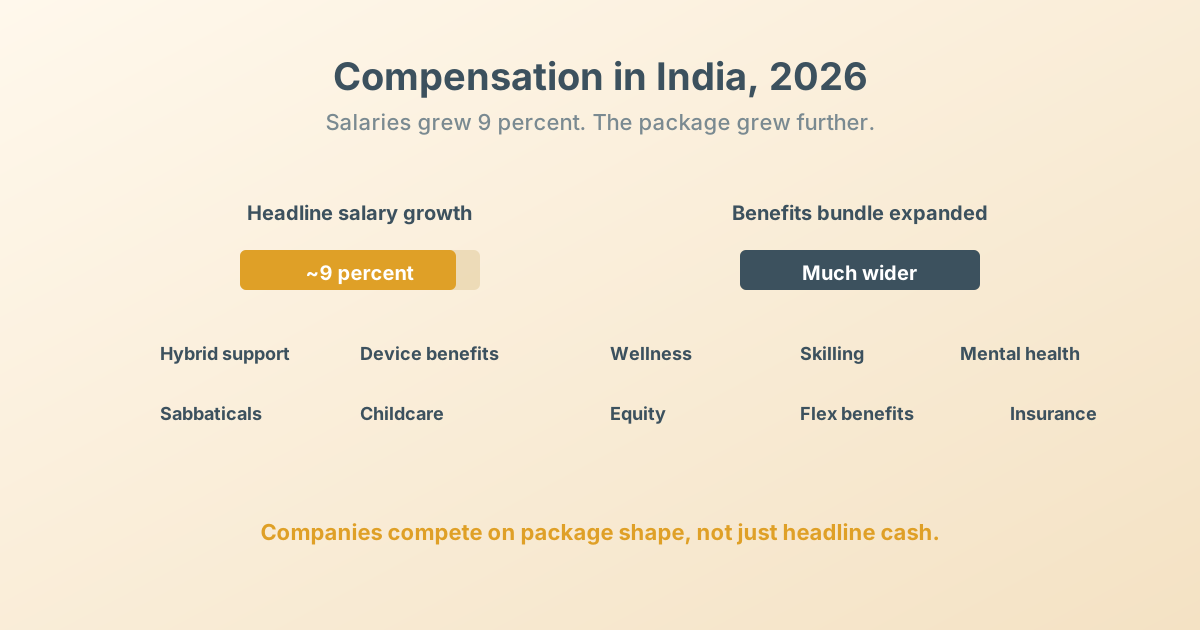
The second is that compensation is becoming sharper. EY India's Future of Pay 2026 report frames it bluntly: salary growth is moderating, and competitive advantage now comes from richer total rewards rather than only headline cash.[²] Benefits that increase the value of every rupee of compensation are exactly the kind of thing that report points HR leaders towards.
The third is retention. When employees feel that their employer makes day-to-day life easier, they stay longer. EY's broader work on holistic rewards calls this the difference between paying more and being worth more.[³] Device benefits sit cleanly inside that frame.
Where the savings actually come from (the general idea)
Indian salary structures are layered. A portion is cash. A portion is statutory contribution. A portion is allowances and benefits that the income tax framework treats differently from straight cash.
Device leasing slots into the third category. The mechanics are not exotic; they have been part of how Indian companies pay people for decades. What is new is that until recently, this kind of structuring was reserved for senior employees with bespoke packages. Modern platforms have made it possible to offer the same advantage right down to a junior engineer in their first job.
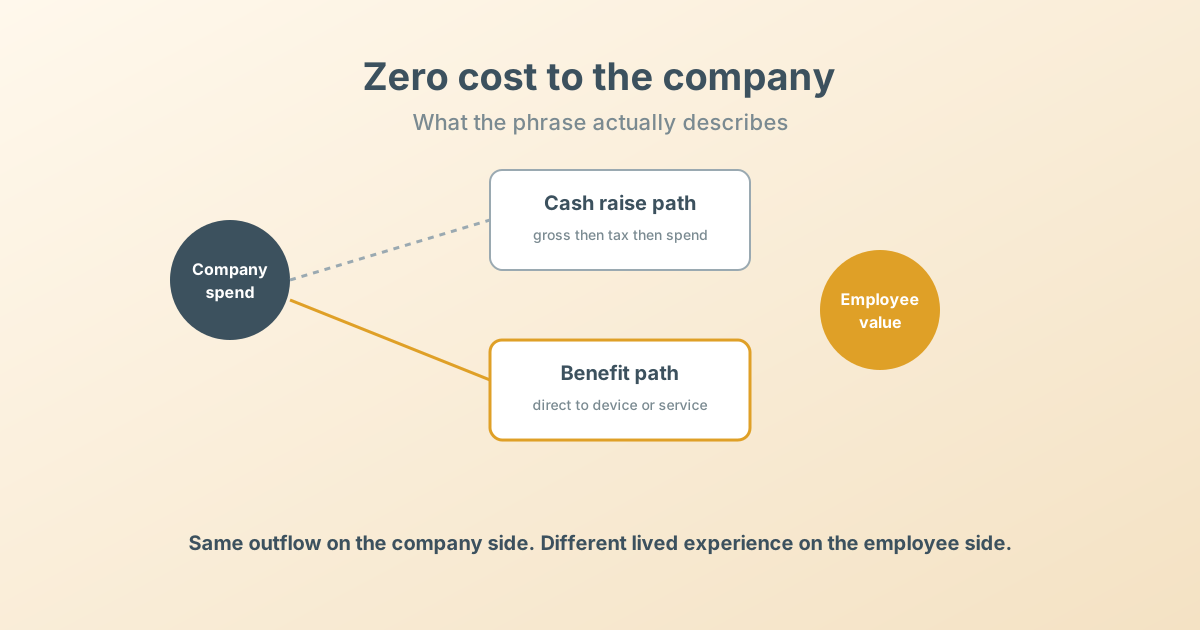
We are deliberately keeping this part general. The exact maths depends on the employee's tax slab, the employer's policy, and the specific device. What is reliable to say is this: a properly structured device benefit lets the employee enjoy a high-value device while the gross cost to the employer and the employee combined is meaningfully less than the obvious alternative of a salary hike and a self-purchase.
If you want a number, the headline that programmes like SmartLease run with is around 40 percent. That is what shows up on the front of the InnovRent home page and is consistent with what other Indian device-benefit operators publish. The exact answer for your situation will need a calculator, not a blog post.
What this looks like from the employee side
For the employee, the experience is closer to a benefit than a transaction. There is no large upfront outlay. The deduction shows up in payroll. The device arrives. Support and replacement are handled. At the end of the lease there is usually a clear path to keep the device for a nominal residual amount, swap it for the next generation, or return it.
The mental model is "employer makes this easy" rather than "I am taking out a loan." That distinction matters, because employees who frame a purchase as a loan tend to delay it, whereas employees who frame it as a benefit tend to use it.
What this looks like from the HR side
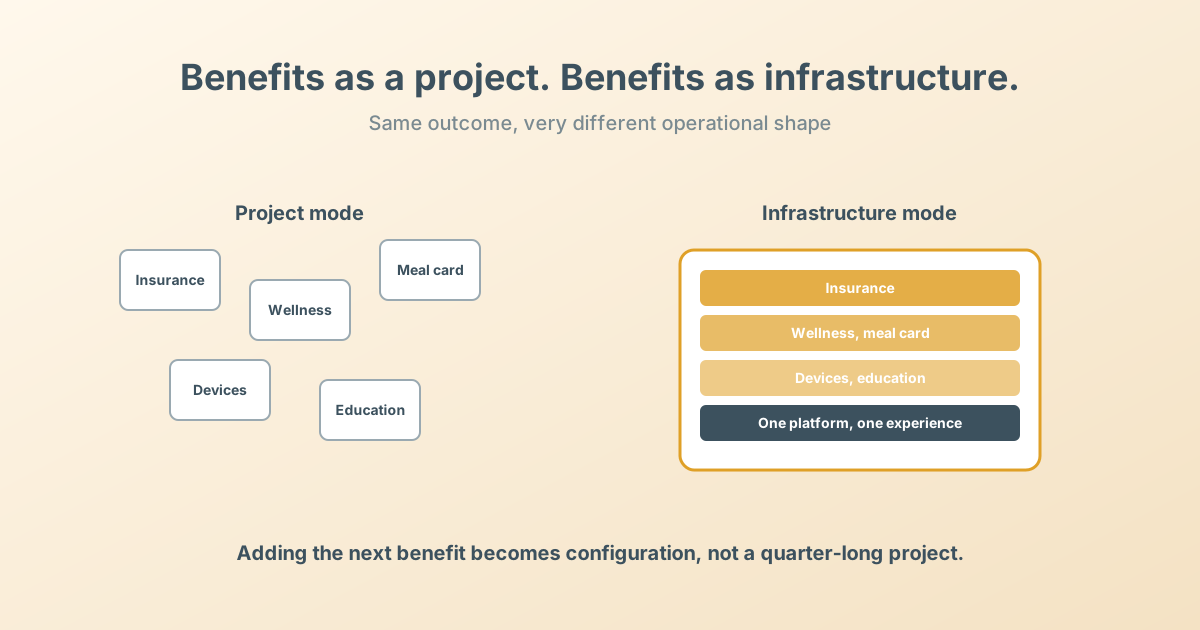
For HR, a structured device benefit removes a long tail of small headaches. Onboarding is faster because new joiners arrive with a working laptop and phone. Compliance is smoother because the records of who has which device live in one place. Refresh cycles are predictable because the lease term defines when the next device shows up. None of this is glamorous, but it is exactly the kind of operational lift HR teams ask for.
It also signals something to the wider organisation. Companies that make device upgrades easy tend to attract the kind of people who care about their craft. That is a softer benefit than the tax line, but it shows up in retention numbers over a year or two.
What it does not look like
A device benefit is not a way to dodge taxes. It is a way to use the salary structuring rules that already exist, in their intended spirit.
It is not a discount on the device. The device costs what it costs; the savings come from where in the salary structure the cost sits.
It is not a free-for-all on hardware. Sensible programmes specify what employees can choose. Some restrict to laptops and phones. Others widen out to tablets and ergonomic furniture. The breadth is a policy decision the employer takes.
And it is not, in itself, a replacement for paying people well. It is an additional lever, not a substitute for cash compensation.
How to decide whether it makes sense for your team
A few questions usually answer it quickly.
Do your employees provide their own home setups today, with patchy results? A device benefit fixes that.
Are you in a hybrid model where the office no longer has every employee's gear sitting at a fixed desk? A device benefit follows the employee, not the desk.
Are you in a hiring market where competitors are offering richer total-rewards packages? A device benefit is a relatively low-friction addition to your existing compensation structure.
If two of those three are true, it is worth a conversation. If three are true, it is worth a pilot.
Where to read next
We have other posts that go into specific angles of this:
- Why an INR 1,00,000 phone costs different amounts depending on how you pay for it
- The employee benefits Indian companies actually offered in 2025
- Why HR leaders are moving away from reimbursement and towards structured benefits
If you want the InnovRent team to walk through what a programme would look like for your company, hello@innovrent.com is the way in.
Sources
- Nasscom, Return to Workplace Survey - Evolving Towards Hybrid Operating Model. https://nasscom.in/knowledge-center/publications/nasscom-return-workplace-survey-evolving-towards-hybrid-operating
- EY India, Future of Pay 2026: India Inc. projects 9.1 percent salary increase as compensation becomes sharper, more skills-led. https://www.ey.com/en_in/newsroom/2026/02/india-inc-projects-9-point-1-percent-salary-increase-in-2026-as-compensation-becomes-sharper-more-skills-led-ey-future-of-pay-2026-report
- EY India, The future of pay: Holistic rewards redefining talent strategies. https://www.ey.com/en_in/insights/workforce/the-future-of-pay-holistic-rewards-redefining-talent-strategies