Ria is 28. She works as a senior analyst at a mid-sized firm in Bengaluru. Her phone, a four-year-old model, is finally giving up. Battery dies by 3 PM. The camera glitches. She has been eyeing the latest flagship for months. List price: about INR 1,00,000.
She opens her savings account. She has the money. She types her UPI PIN and pauses.
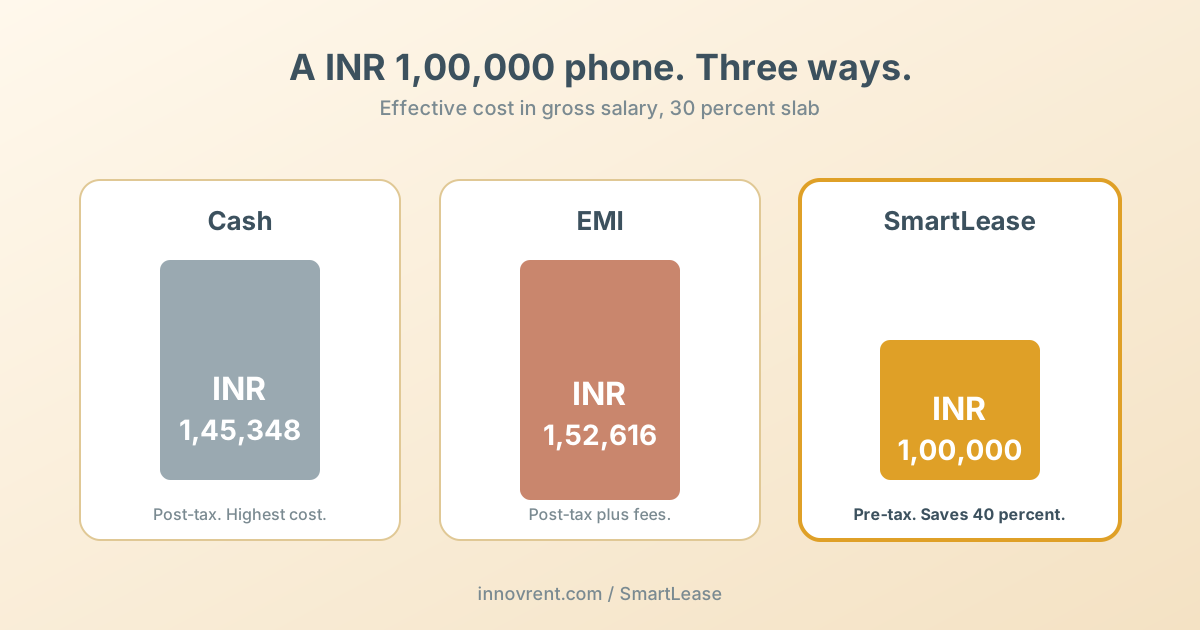
If she pays cash today, she will rebuild that buffer over the next six months. If she finances on EMI, she pays interest, plus a processing fee, plus the same money out of post-tax income. Either way, that phone is being bought with rupees she has already paid tax on.
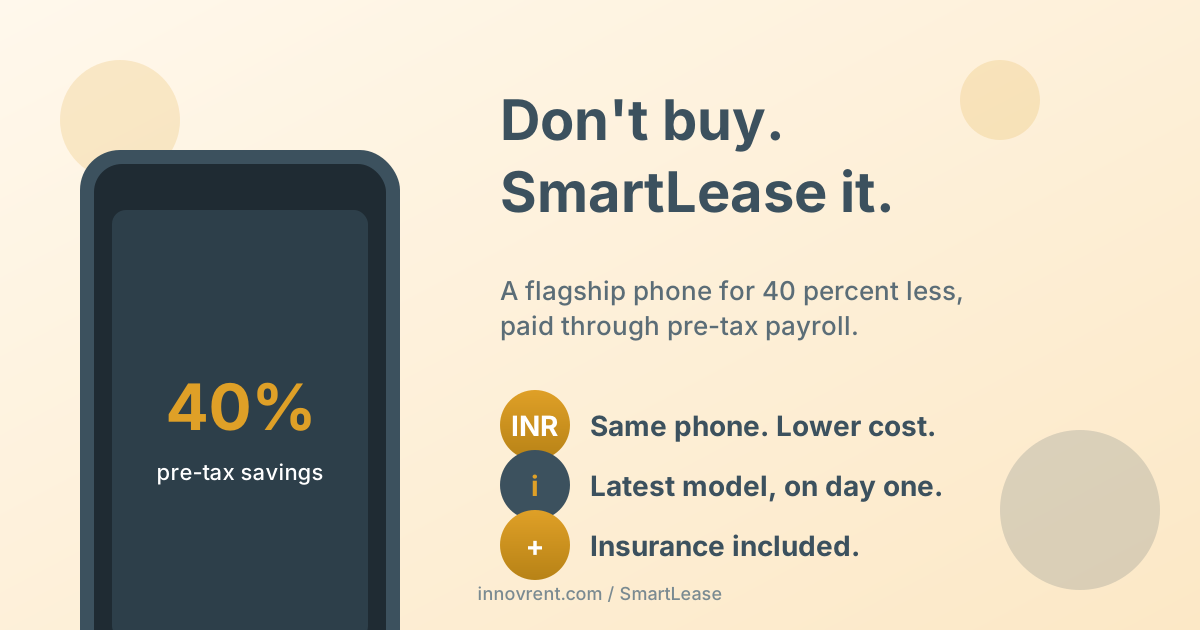
There is a third option her employer recently added. A SmartLease, deducted pre-tax from her salary. Same phone. Same brand. Same warranty. About 40 percent cheaper in real, take-home terms.
This post explains the maths, the structure, and why this option exists.
The income tax math, simplified
Take a salary slab where Ria's marginal tax rate is 31.2 percent (this includes cess; she falls into the 30 percent slab). For every INR 100 of gross salary, INR 31.20 goes to the government and INR 68.80 reaches her bank account.
To buy a phone worth INR 1,00,000 with cash, she needs INR 1,00,000 of post-tax money. Which means her employer had to pay her roughly INR 1,45,348 in gross salary for that INR 1,00,000 to actually reach her after tax.
| Scenario | Gross salary needed | Tax taken | Take-home spent on phone |
|---|---|---|---|
| Cash buy | INR 1,45,348 | INR 45,348 | INR 1,00,000 |
| SmartLease | INR 1,00,000 | INR 0 (deducted before tax) | INR 0 |
The effective cost difference, in gross salary terms, is roughly INR 45,000. That is the 40 percent you save, made of two things: the income tax you would have paid on the salary you used to buy the phone, plus a small additional benefit from how the lease is structured.
This is not a discount on the phone. It is a tax efficiency on the salary used to acquire it.
"But isn't this just an HRA-style benefit?"
Sort of, and that is why it is allowed under existing salary structuring rules. India's Income Tax Act has long permitted certain components of salary, like House Rent Allowance, Leave Travel Allowance, food coupons, and employer-provided equipment, to be treated specially. Device leasing programmes fall into the employer-provided-equipment bucket. The legal framing is straightforward: your employer owns the device during the lease term. You use it. The lease cost is deducted from your gross salary, before income tax is calculated. At the end of the lease term, ownership typically transfers to you for a nominal residual value, or you can hand the device back.
You are not buying a phone. You are using one your employer provides, structured as a deduction from your CTC.
What does not change
This is the part that surprises most first-time users. The lease is operationally invisible.
- Any model, any brand. You pick the device the same way you would on Amazon. iPhone, Samsung, OnePlus, MacBook, Dell, doesn't matter. SmartLease has the catalogue of every major device sold legally in India.
- Latest models. Not last year's leftover stock. The day a new iPhone or Galaxy launches, it is in the catalogue.
- Standard manufacturer warranty. The phone is new. It carries the same warranty as if you bought it from a retailer.
- Insurance can be bundled. Most leases include accidental damage and theft cover. Optional.
- No GST surprises. The lease price you see is what gets deducted. No "tax extra" lines added later.
- End of lease, you decide. Keep the device for a small residual amount, upgrade to a new lease, or hand it back. Whichever fits.
What does change
- One conversation with HR. You ask if your employer offers SmartLease. If yes, they share an enrolment link. If no, you forward this post and ask them to consider it.
- One signature. Digital. Five minutes.
- A line on your payslip. Where it used to say "Special Allowance", a portion now says "Device Lease". The take-home difference is small (because what gets deducted is roughly offset by the tax saving), and the device is in your hand on day one.
Why your employer says yes
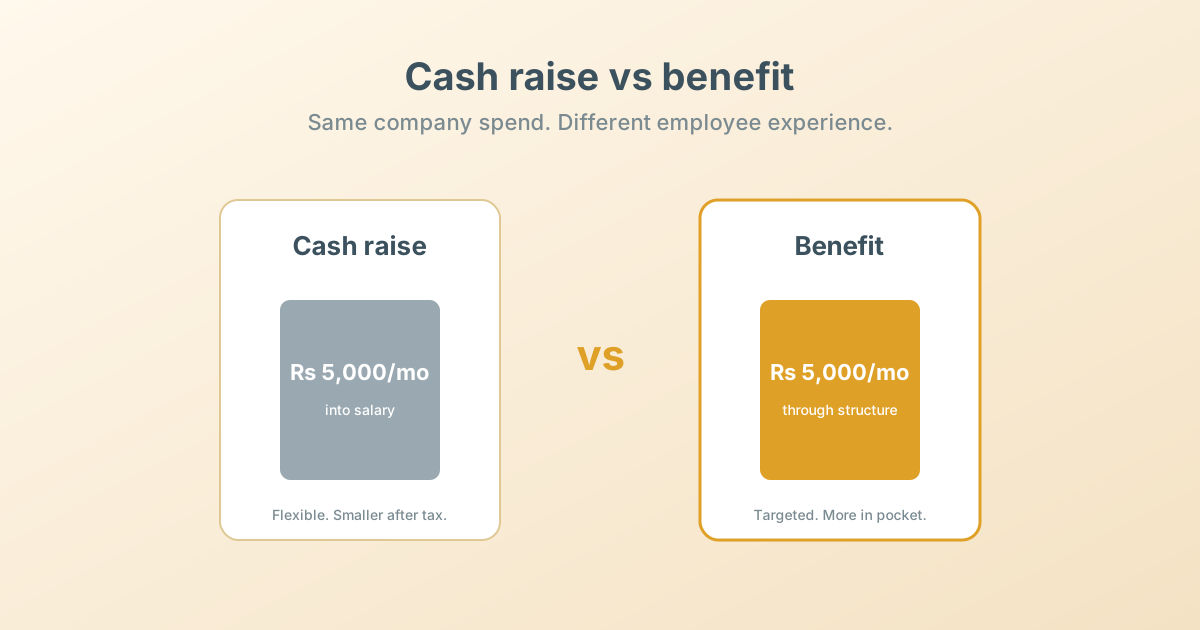
This is the part that makes the programme sustainable. From the employer's side, SmartLease is a benefit they can offer without changing their cost-to-company structure. The lease cost is a salary-substitution, not a salary-addition. They get a happier employee, a more current device fleet, and zero inventory or asset-tracking burden, because the operational side is handled by InnovRent.
For HR teams, this is the kind of benefit that scales without paperwork. There is no reimbursement to chase, no asset register to maintain, no end-of-life device disposal to manage.
What this is not
Worth being clear, because we have seen the questions.
- It is not a loan. There is no interest. There is no credit check that touches CIBIL.
- It is not a subscription you can cancel any time. The lease term is usually 12 to 36 months. You commit for the term.
- It is not "free" money. You still pay for the device. You just pay in pre-tax rupees, which is structurally cheaper.
- It is not limited to phones. Laptops, tablets, ergonomic chairs, sit-stand desks, monitors. Anything an employer can reasonably classify as employee-use equipment.
What it actually feels like
When Ria's employer rolled out SmartLease, she enrolled in eight minutes. She picked the phone. Confirmed delivery address. Signed. The phone arrived in two days.
Her payslip, the next month, had a new line. She compared her take-home before and after. The difference was small enough that she had to do the maths twice to convince herself she was reading it right.
Six months in, the phone still works. The camera still focuses. Her savings account is intact.
If you have read this far, the next step is asking your HR whether your company already runs SmartLease or something like it. If it does, the order portal shows your exact savings against your salary slab. If it doesn't, the FAQ covers the questions HR usually asks before saying yes.
The TL;DR: don't buy your next device. Lease it pre-tax.