Walk through any Indian benefits trade show in 2026 and you will see the phrase "zero cost to the company" on a banner somewhere. It is one of the more interesting marketing terms in HR tech because it actually means something specific - and because most people, on both sides of the table, do not quite know what.
This post is a general overview of the idea. It explains where it comes from, what it accurately describes, and what it does not.
The simple version
A zero-cost-to-the-company benefit is one where the employer offers something of meaningful value to the employee without adding to the company's salary outflow.
The way that math works is that the benefit is structured inside the existing salary envelope, rather than on top of it. The employee chooses to take a portion of their compensation as that benefit instead of as cash. The company's gross spend on the employee does not change. The employee gets something they would have spent the cash on anyway, in a form that is gentler in net terms.
That is the whole frame. Everything else is implementation detail.
Why the math works
The simplest way to see why this can be a real saving, rather than an accounting trick, is to think about the difference between gross and net.
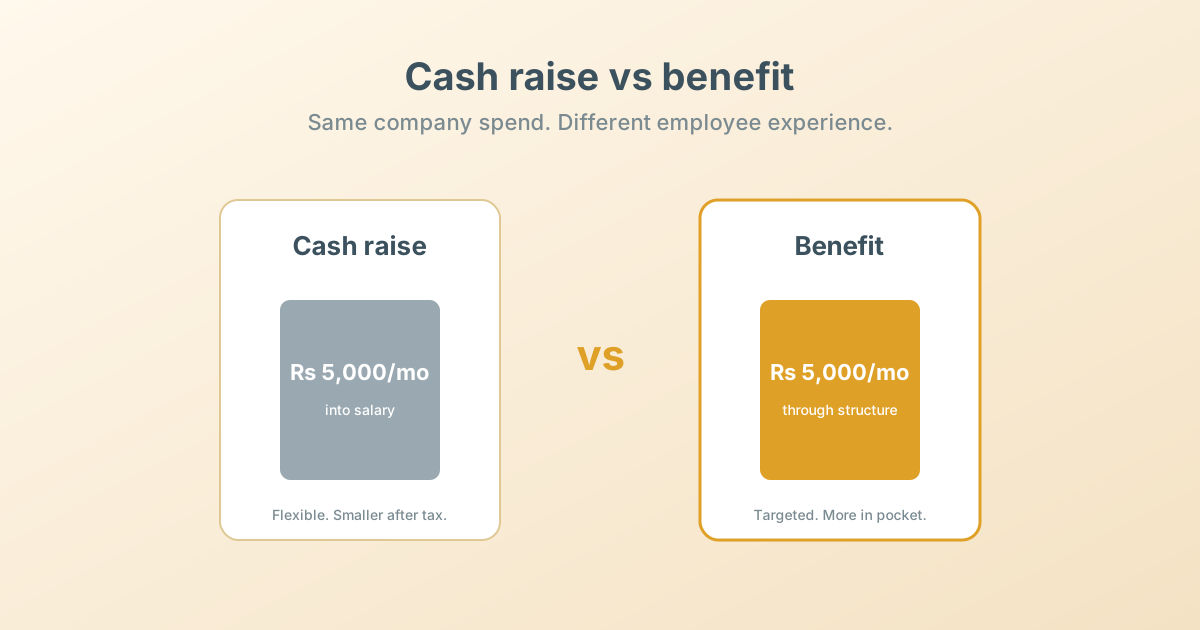
When a company gives an employee a Rs 5,000 cash raise, the company is out Rs 5,000 (plus statutory loadings). The employee receives some amount less than Rs 5,000 in their account, depending on their slab. If they then go out and buy a phone with that money, they have paid for the phone in post-tax rupees.
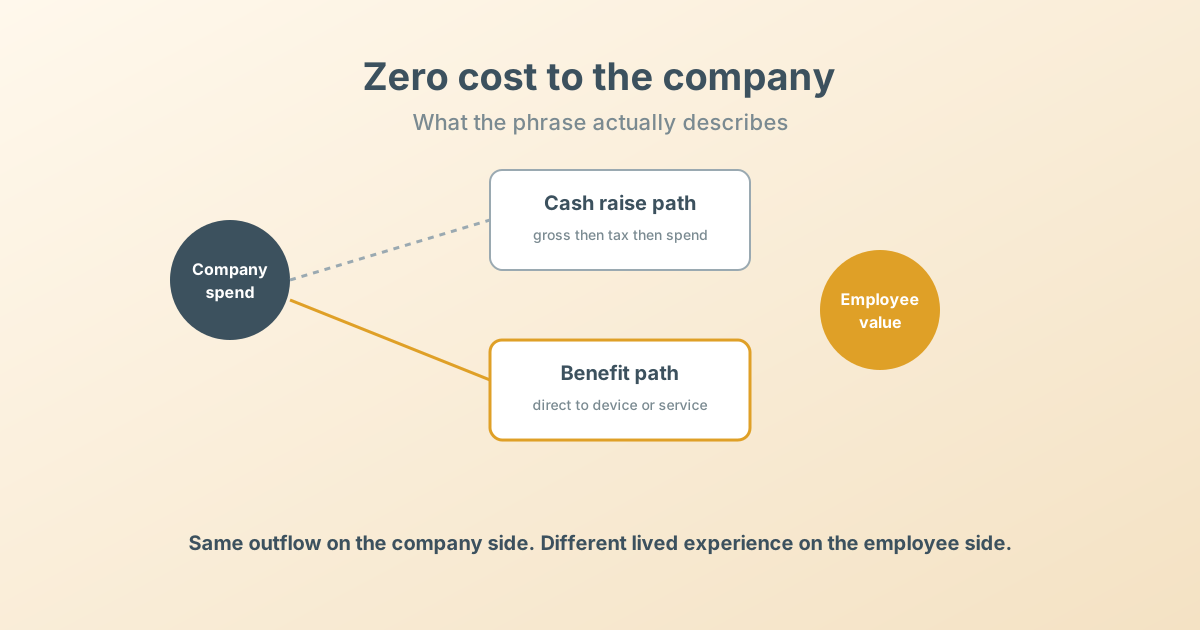
When the same Rs 5,000 is structured as a benefit that delivers the equivalent device, the company is still out Rs 5,000 on the books. But the employee receives the device directly, without the intermediate step of "raise the cash, deduct the tax, then spend." The difference between the two paths is the structural advantage that "zero cost" describes.
The phrase is sometimes shortened to "zero cost to the company" because, from the CFO's point of view, the headcount cost line moves the same regardless of which side of the package the value lives in. From the employee's point of view, the lived experience can be meaningfully better.
Where the phrase stops being accurate
"Zero cost to the company" is most defensible when the comparison is "this benefit versus an equivalent cash raise that the employer was going to give anyway."
It is less defensible when the comparison is "this benefit versus offering the employee nothing." In that case, the company is still spending the money to deliver the benefit. The cost has not vanished; it has been allocated inside an existing budget.
In practical conversations, the phrase usually carries the first meaning. The HR head and the finance director are not deciding between "give a benefit" and "do nothing." They are deciding between "give cash" and "give a benefit." Inside that frame, "zero cost to the company" is a fair description.
What zero-cost benefits actually look like
Several categories of benefit can sit inside this frame:
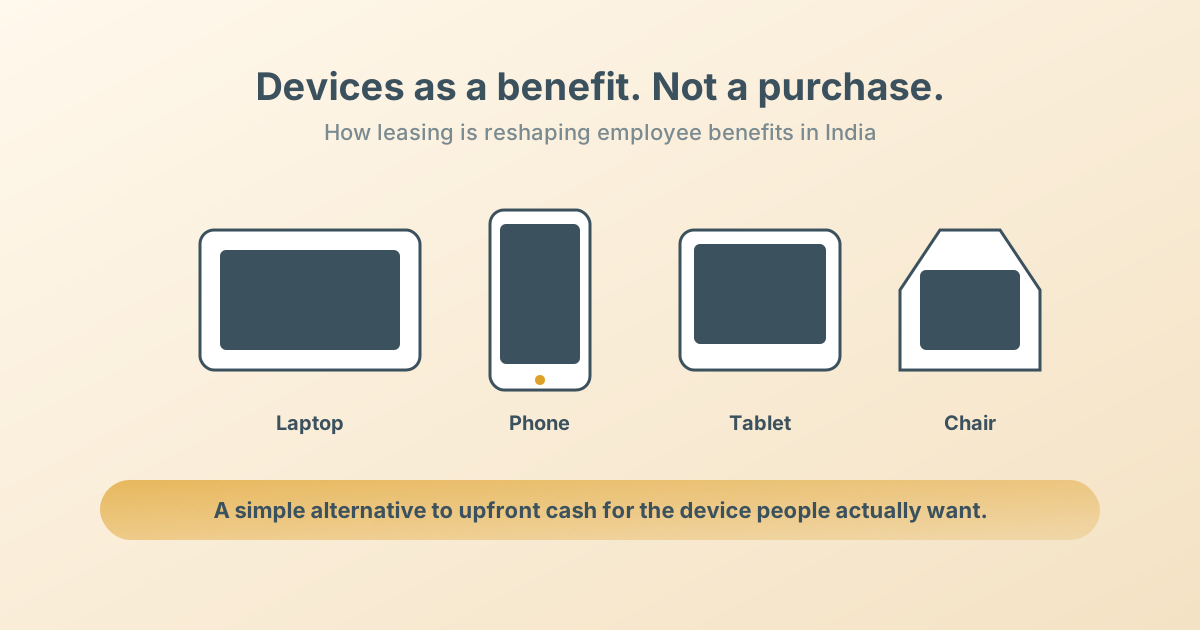
- Structured device benefits, where the employee chooses a laptop, phone, or piece of furniture and the cost is structured through their payroll.
- Some forms of food, transport, and meal-card structuring.
- Education and skilling allowances that flow through specific structures.
- Health and wellness benefits, depending on how they are designed.
The thing these have in common is that they are recognised, deliberate parts of how Indian salary architecture has worked for a long time. They are not aggressive optimisation. They are using categories that are already there.
Device leasing, in particular, has become a clean example of this in 2025 and 2026 because it is operationally simple. The employee chooses a device; the platform handles procurement and support; the cost lives in a defined slot of the package. The employer does not add headcount cost; the employee enjoys a current-generation device. We have written about the general shape of this in How device leasing is changing employee benefits in India.
What HR teams should ask
When a vendor says "zero cost to the company," the right follow-up questions are short.
First: what is the comparison? "Zero cost vs an equivalent raise" is a reasonable claim. "Zero cost vs nothing" is not.
Second: what is the employee experience? A benefit that sits inside the salary envelope is only useful if the employee actually uses it. Programmes that lock the employee into devices they would not have chosen tend to score badly here.
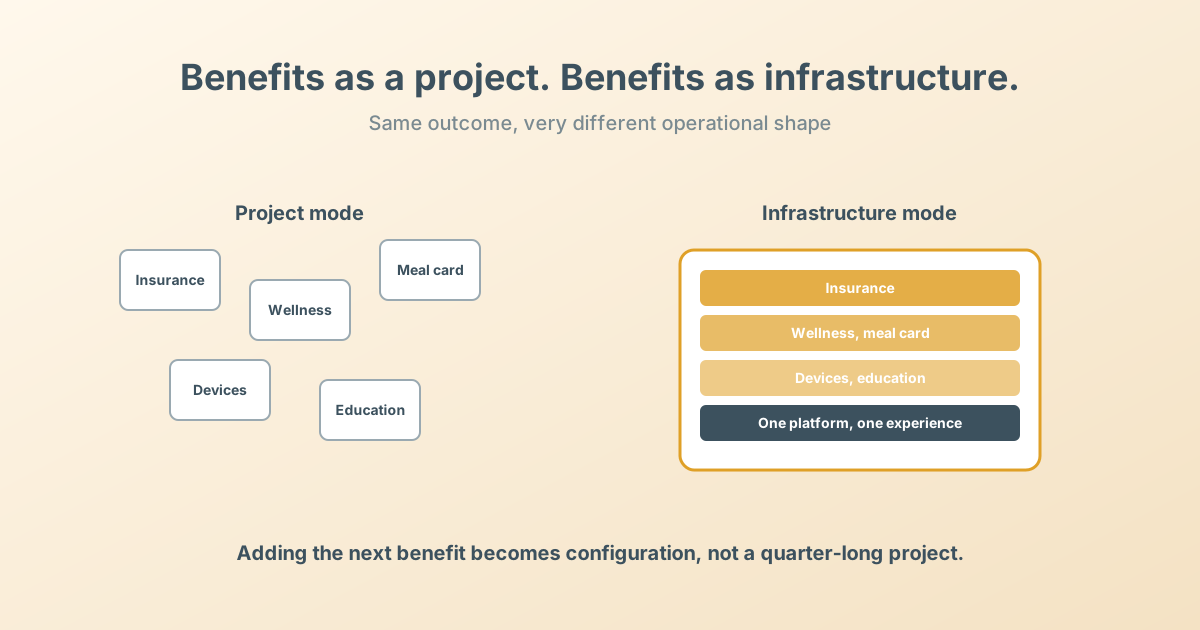
Third: what is the operational load? If the benefit costs HR a quarter of a full-time hire to administer, the company is paying for it in HR time even though the salary line did not move.
Fourth: what happens at the end? Programmes with awkward end-of-term experiences (forced returns, large residual payments, ownership disputes) can leave employees feeling worse off than if they had taken cash. Programmes with clean end-of-term experiences feel like benefits.
A well-designed zero-cost benefit answers all four questions cleanly. A poorly-designed one usually fails on the second or fourth.
What this means in 2026
The interesting shift in 2026 is that zero-cost-style benefits are no longer the preserve of senior employees. EY India and other consultancies have repeatedly noted that the new flexibility tier is broader and more standardised than it used to be.[¹]
That is partly because the administrative load has come down. Modern platforms make it possible to administer a sophisticated benefits structure for a junior engineer at almost the same per-employee cost as for a VP. The economics that used to restrict benefits engineering to expensive employees no longer do.
For HR teams looking at the 2026 package, the practical advice is to take the phrase "zero cost to the company" seriously when the comparison frame is honest, and to ignore it when the frame is being stretched. The benefits worth buying are the ones that the employee will use, that the HR team can administer lightly, and that come out cleanly at the end.
Where to read next
- How device leasing is changing employee benefits in India
- When a small benefit beats a bigger salary hike
- The Indian employee benefits landscape in 2026
If you would like to walk through whether a zero-cost-style device benefit makes sense for your team, hello@innovrent.com is the place to start.
Sources
- EY India, The future of pay: Holistic rewards redefining talent strategies. https://www.ey.com/en_in/insights/workforce/the-future-of-pay-holistic-rewards-redefining-talent-strategies