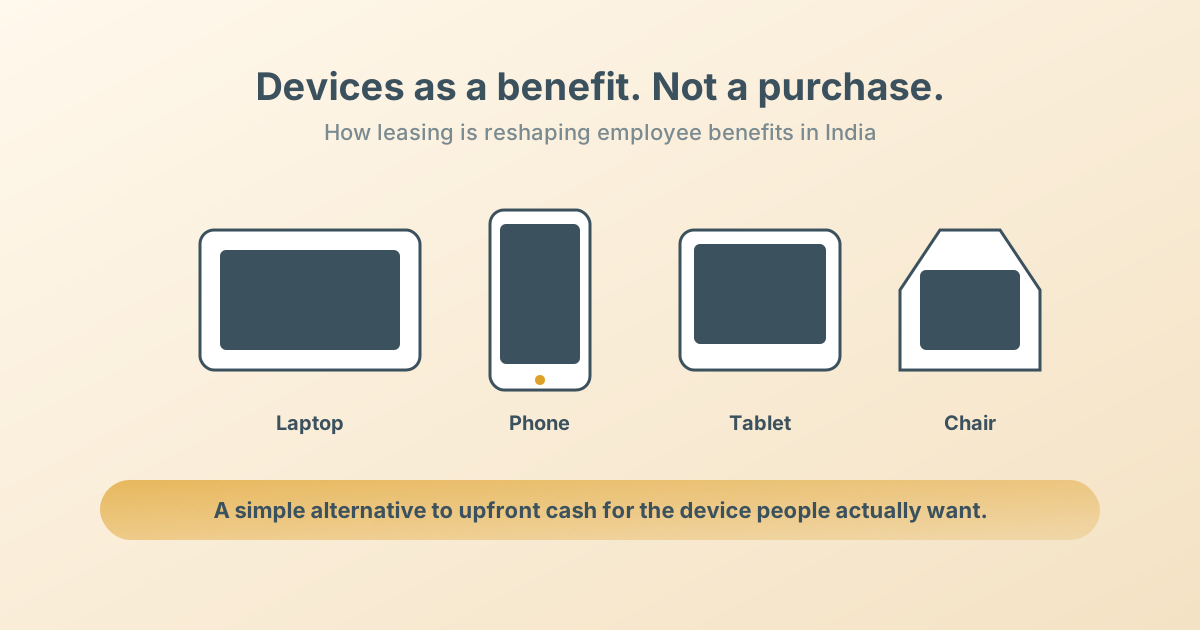
If you ran an employee electronics benefit programme in 2020, your decisions were simple. The company gave laptops. Employees worked in the office. Phones were a personal expense, occasionally reimbursed. There was no Digital Personal Data Protection Act yet. The CIO worried about MDM, not data residency.
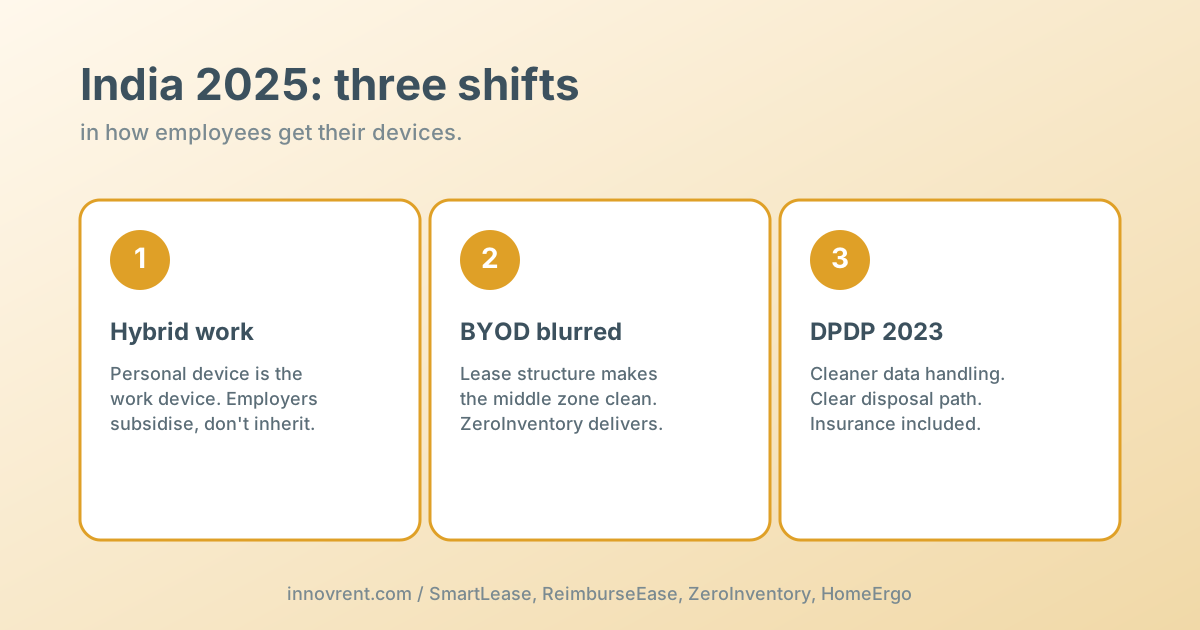
Five years on, every one of those defaults has shifted. This post walks through the three trends that have reshaped how Indian employers approach device benefits in 2025, and what SmartLease, ReimburseEase, ZeroInventory, and HomeErgo Lease look like in this new landscape.
Trend 1: hybrid work made the personal device the work device
The pandemic did not invent remote work, but it did normalise the personal phone as the primary work surface. Email arrives on the personal phone. Slack pings. Calls happen on personal numbers. The boundary between "company device" and "personal device" eroded for everyone except the engineering team that still needed the company-issued laptop.
Two consequences followed.
One: employers wanted to support the personal device without inheriting it. Issuing a fully-managed corporate phone to every employee was expensive and unloved. Letting the phone stay personal was the right call, but the company still wanted to subsidise it.
Two: employees realised that the device they used 14 hours a day mattered enough to justify the latest model. The two-year upgrade cycle compressed.
SmartLease's answer here is the pre-tax lease structure. The device is the employee's to use. The employer subsidises the cost through salary structuring. The employer doesn't have to manage the device, doesn't have to inventory it, doesn't have to handle end-of-life. The employee gets the latest model.
This is the same problem that companies in the US solved with "tech stipends" a decade ago. The Indian context required a different mechanism because of how the income tax structure works, but the user experience ends up similar: company subsidises, employee chooses, no asset register required.
Trend 2: BYOD vs employer-provided device blurred
The hard line between "BYOD" (bring your own device, company has no rights over it) and "employer-provided device" (company owns it, manages it, can wipe it) blurred when both started looking the same.
Many Indian companies now operate in a middle zone: the device is technically employer-leased, but the employee uses it as their primary personal device too. The compromise is wrapped in usage policies that vary widely.
The lease structure makes this middle zone explicit and clean. The employer owns the device during the lease term. The employee uses it for everything. At end of lease, the employee buys out the residual or hands the device back. There is a clear ownership transition rather than a permanent grey area.
For ZeroInventory specifically, the structure removes the inventory pain point. The company doesn't have a closet full of laptops with sticker labels. InnovRent maintains the asset side. The company sees employee lease lines on a payroll report, nothing more.
Trend 3: DPDP 2023 compliance changed how employers think about data on devices
The Digital Personal Data Protection Act of 2023 made every Indian employer a "data fiduciary" for the personal data they handle, including employee data. The rules of the road for storing, processing, and securing personal data are tighter than they were.
This matters for device benefits because employer-owned devices used by employees carry employee personal data that the employer is now responsible for. If the company-issued phone is lost, that is a data event. If the laptop is stolen, that is a data event. The compliance perimeter has expanded.
The lease structure helps here in three ways.
One: clear data handling boundaries. The lease agreement specifies what happens to data at end of lease (it goes with the employee, with the device), removing ambiguity.
Two: secure device disposal. If the company is involved in device disposal (when it owns the device outright and the employee leaves), there are DPDP obligations around secure data wipe. With a lease, the device transitions to the employee, which removes the company from the disposal loop.
Three: insurance and loss handling. Lease structures typically include device insurance covering loss, theft, and accidental damage. This means the response to a lost device is not "what data was on it" but "we have insurance, the employee gets a replacement, the original device is reported and remotely wiped". Cleaner from a compliance standpoint.
How the SmartLease product line maps to these trends
SmartLease is the umbrella programme. Under it:
- ReimburseEase is for companies replacing existing reimbursement processes with structured leases. Discussed in detail in our previous post for HR leaders.
- ZeroInventory is for companies that want device benefits without the asset-tracking overhead. Suitable for fast-growing companies where the IT team is small.
- HomeErgo Lease extends the model to ergonomic furniture. Chairs, sit-stand desks, monitors. Same pre-tax structure, same employer-side cleanliness.
The common thread: structured employer-subsidised access to equipment, without the company taking on inventory, disposal, or expense-claim overhead.
What HR leaders are asking us in 2025
A non-exhaustive sample of the questions in our discovery calls this year, in case you want to use them as a checklist for your own programme review.
- "Our reimbursement backlog is hurting our employee NPS. Will moving to a lease structure actually fix that, or just push the problem elsewhere?" (It moves the problem; we are happy to walk through where.)
- "How does this interact with the Old vs New Tax Regime debate? Most of our team is now on the New Regime." (The lease deduction is structured around the gross-salary cost line, which works in either regime, but the relative saving is larger in the Old Regime where deductions matter more. New Regime employees still benefit, just by a smaller amount.)
- "What happens if an employee resigns mid-lease?" (Several mechanisms. The lease can be transferred, terminated with a small fee, or assigned to the employee outright with the residual value treated as a perk. Each company picks a default.)
- "How is this audited?" (Standard transfer-pricing and salary-structuring audit. Boring, in a good way. We provide the documentation.)
What to do next
If you are in an HR or finance leadership role at an Indian company and have not reviewed your device benefit programme in the last 18 months, it is worth a 30-minute conversation. The reimbursement model is the legacy default; the lease model is becoming the new default. The transition is operationally simpler than most people expect.
Book a demo or read our case study for one company's rollout.